
As mentioned in class today, we'll be discussing pp. 17 - 53 (the first two chapters in the Penguin edition of Otranto) on Wednesday. The Prefaces to the two editions contain a great deal of interesting material about how C18 readers encountered this novel, but we'll save discussion of the novel's frame until after we've got a handle on the narrative itself.
Some hints:
There's not a clear main character/protagonist whose adventures you should follow, so things can get confusing as you follow a couple of different plot threads at the same time. It's not a bad idea to sketch out a family tree in the inside back cover, so that you can fill in characters as you meet them.
Page number references that help you identify when various characters become relevant will make your chart/family-tree a useful tool when you have to write on the novel on the final exam.
Pay attention to the peasant who shows up on p. 20 and gets imprisoned under the casque. He becomes important later.
In what ways does this novel appear to track with the other reading you've done for this course? In what ways does this novel appear to be an outlier, unlike anything else you've read in this course? Be specific, and cite a passage to illustrate what you mean.
Deadline: Wednesday (4/22), 10am.
Monday, April 20, 2009


Friday, April 17, 2009
For Credit: From the Sublime to the Ridiculed
In class on Monday, we'll be looking at these passages from Jane Austen's Northanger Abbey (the same novel we looked at in preparation for talking about the sublime).
Catharine Morland, as we saw last Monday, is a bit baffled about the sublime and about how to converse about it, but she is a devoted fan of Gothic fiction.
(Some background to the last passage excerpted here--the rest are fairly self-explanatory chunks of conversation about novels): Catherine's taste for the genre abates a bit after she is invited to visit Eleanor and Henry Tilney in their home, the Northanger Abbey. [****SPOILERS AHEAD!!!****] The house, the modernized ruins of an ancient abbey, fulfills all of Catherine's expectations for gloom and mystery--so much so that she convinces herself that the room in which her new friends' mother died must have some deep, dark secret that she must investigate. Predictably, Henry comes upon her exploring the room in question, and the ensuing conversation reveals Catherine's suspicions, to her great mortification.)
The question you can reflect on here: based on the discussion of novels in general, and gothic fiction in particular, in these passages, where do you think Austen stands? Is a taste for Gothic fiction in young people to be squashed or tolerated? What reasons does she offer for either view? Cite the specific lines that affirm your interpretation.
Deadline: Monday (4/20), 10am.
Catharine Morland, as we saw last Monday, is a bit baffled about the sublime and about how to converse about it, but she is a devoted fan of Gothic fiction.
(Some background to the last passage excerpted here--the rest are fairly self-explanatory chunks of conversation about novels): Catherine's taste for the genre abates a bit after she is invited to visit Eleanor and Henry Tilney in their home, the Northanger Abbey. [****SPOILERS AHEAD!!!****] The house, the modernized ruins of an ancient abbey, fulfills all of Catherine's expectations for gloom and mystery--so much so that she convinces herself that the room in which her new friends' mother died must have some deep, dark secret that she must investigate. Predictably, Henry comes upon her exploring the room in question, and the ensuing conversation reveals Catherine's suspicions, to her great mortification.)
The question you can reflect on here: based on the discussion of novels in general, and gothic fiction in particular, in these passages, where do you think Austen stands? Is a taste for Gothic fiction in young people to be squashed or tolerated? What reasons does she offer for either view? Cite the specific lines that affirm your interpretation.
Deadline: Monday (4/20), 10am.
Thursday, April 16, 2009
The Sublime- What is it good for?
During class we discussed what the sublime as a philosophy is and why a significant amount of people in the later C18 seemed to become so concerned with it. There is a lot of confusion over how someone is to argue for or against the sublime when it comes to literature. This is a confusion that literary enthusiasts have faced for a long time, and to this day there is still no concrete answer or formula to define, discuss, or argue the sublime. There are so many theories out there it will make your head spin. In class we focused mainly on the later C18 concept/development of sublime high theory and this helped narrow down a central discussion. To help you more define what the C18 knew as the sublime, check out this beautiful Wiki. excerpt (read the eighteenth century).
After reading this, and after the two discussions this week and the one upcoming this Friday what do you think sums up the sublime for the later C18 reader. Do you think it still holds true today, or has the theory developed so much since its infancy that its almost unrecognizable?
Or answer how you would argue in an essay for or against the Sublime as the later C18 illustrates it.
Wednesday, April 15, 2009
For Credit: Is a Unanimity of Response "Almost Dehumanizing"?
In class today (Wednesday), a number of people seemed repelled by Burke's claim that everyone will respond in similar ways (and for similar reasons) to the sublime. "Almost dehumanizing" was the remark I wrote down in my notes. And yet, though there was some disagreement and confusion about what texts and what kinds of emotional stirrings are manifestations of the sublime, there seemed to be some general agreement about the emotional power and sublimity of Independence Day.
Moreover,
Read the rest of the review, written the day the movie opened in San Francisco, here.
Offer your reflections on the question posed in the title here, preferably with some attention to what the answer means for our understanding of later C18 lit.
Deadline, Friday (4/17), 10am.
Moreover,
A measure of the success of ``Independence Day'' is that all those scenes of destruction shown in the trailer, ironically cheered for months in movie theaters, are in no way campy in context. The film instills feelings of anxiety and doom, and it is upsetting to see the White House obliterated by a green death ray, the Capitol blasted to bits, the Empire State Build ing light up and come apart like a firecracker.
Read the rest of the review, written the day the movie opened in San Francisco, here.
Offer your reflections on the question posed in the title here, preferably with some attention to what the answer means for our understanding of later C18 lit.
Deadline, Friday (4/17), 10am.
For Credit: The Beautiful vs. The Sublime (according to Burke)
Beautiful:
Beautiful:
Sublime:
Discuss. Cite Burke or Longinus to support your claims.
Deadline: Friday (4/17), 10am.
Tuesday, April 14, 2009
The Sublime: Thinking on High Theory
The excerpt “Things as They Are; or The Adventures of Caleb Williams” is from a novel in which Caleb is the secretary for a Squire Falkland, who is hiding a secret.He searches a room he was warned against entering and discovers evidence proving Falkland guilty of a murder for which another man was hanged. Though Caleb promesies not to tell, the squire cannot deal with the fact the his servant has even a bit of power over him, so he makes sure that this secret will never get out. Through seemingly seedy practices, Falkland forces Caleb to flee his vengeance. Godwin described his novel as “a series of adventures of flight and pursuit; the fugitive in perpetual apprehension of being overwhelmed with the worst calamities” Through the reading of the excerpt of “Caleb Williams” about Falkland, assuming that this is Godwin’s view of true sublimity, who does it seem that Goodwin is more likely to side with Longinus or Burke, or does he present an entirely different view of the sublime? Use specific points from the character representation.
To aid you in this thought we have included another passage, which we would like you to bring to class if possible, from the point of view of Caleb WIlliams himself.
Whose argument does Williams seem to support, Burke or Longinus?
Also, after reading Longinus and Burke, who do you side with? Why? Who seems to be more or less reasonable?
To aid you in this thought we have included another passage, which we would like you to bring to class if possible, from the point of view of Caleb WIlliams himself.
Whose argument does Williams seem to support, Burke or Longinus?
Also, after reading Longinus and Burke, who do you side with? Why? Who seems to be more or less reasonable?
Sunday, April 12, 2009
For Credit: Separate Rights are Lost in Mutual Love
Below is the poem I'll be distributing in class tomorrow. I couldn't give you a C18 version of it from ECCO because, although the poem was probably written in 1795 as a response to Mary Wollstonecraft's Vindication of the Rights of Woman, it was not published until after Barbauld's death in 1825 (and yes, this is the same Barbauld who wrote the Epistle to William Wilberforce).
You can get a head start, though, on tomorrow's discussion by reading the poem and saying here, is Barbauld basically supporting the status quo where the "rights of women" are concerned, or does she agree (with Wollstonecraft) that political changes are needed to improve the lot of women? Cite some lines that support your view and explain what they mean.
Deadline: Monday (4/13), 10am.
The Rights of Women
by Anna Laetitia Aikin (Barbauld)
(1743-1825)
Yes, injured Woman! rise, assert thy right!
Woman! too long degraded, scorned, opprest;
O born to rule in partial Law's despite,
Resume thy native empire o'er the breast!
Go forth arrayed in panoply divine;
That angel pureness which admits no stain;
Go, bid proud Man his boasted rule resign,
And kiss the golden sceptre of thy reign.
Go, gird thyself with grace; collect thy store
Of bright artillery glancing from afar;
Soft melting tones thy thundering cannon's roar,
Blushes and fears thy magazine of war.
Thy rights are empire: urge no meaner claim,--
Felt, not defined, and if debated, lost;
Like sacred mysteries, which withheld from fame,
Shunning discussion, are revered the most.
Try all that wit and art suggest to bend
Of thy imperial foe the stubborn knee;
Make treacherous Man thy subject, not thy friend;
Thou mayst command, but never canst be free.
Awe the licentious, and restrain the rude;
Soften the sullen, clear the cloudy brow:
Be, more than princes' gifts, thy favours sued;--
She hazards all, who will the least allow.
But hope not, courted idol of mankind,
On this proud eminence secure to stay;
Subduing and subdued, thou soon shalt find
Thy coldness soften, and thy pride give way.
Then, then, abandon each ambitious thought,
Conquest or rule thy heart shall feebly move,
In Nature's school, by her soft maxims taught,
That separate rights are lost in mutual love.
(And if you prefer to hear your poetry--with musical accompaniment--check out this version, which appears to be some sort of class project. Come talk to me if you and a couple of classmates want to upload an interpretive reading of an obscure C18 poem as part of your final exam.)
You can get a head start, though, on tomorrow's discussion by reading the poem and saying here, is Barbauld basically supporting the status quo where the "rights of women" are concerned, or does she agree (with Wollstonecraft) that political changes are needed to improve the lot of women? Cite some lines that support your view and explain what they mean.
Deadline: Monday (4/13), 10am.
The Rights of Women
by Anna Laetitia Aikin (Barbauld)
(1743-1825)
Yes, injured Woman! rise, assert thy right!
Woman! too long degraded, scorned, opprest;
O born to rule in partial Law's despite,
Resume thy native empire o'er the breast!
Go forth arrayed in panoply divine;
That angel pureness which admits no stain;
Go, bid proud Man his boasted rule resign,
And kiss the golden sceptre of thy reign.
Go, gird thyself with grace; collect thy store
Of bright artillery glancing from afar;
Soft melting tones thy thundering cannon's roar,
Blushes and fears thy magazine of war.
Thy rights are empire: urge no meaner claim,--
Felt, not defined, and if debated, lost;
Like sacred mysteries, which withheld from fame,
Shunning discussion, are revered the most.
Try all that wit and art suggest to bend
Of thy imperial foe the stubborn knee;
Make treacherous Man thy subject, not thy friend;
Thou mayst command, but never canst be free.
Awe the licentious, and restrain the rude;
Soften the sullen, clear the cloudy brow:
Be, more than princes' gifts, thy favours sued;--
She hazards all, who will the least allow.
But hope not, courted idol of mankind,
On this proud eminence secure to stay;
Subduing and subdued, thou soon shalt find
Thy coldness soften, and thy pride give way.
Then, then, abandon each ambitious thought,
Conquest or rule thy heart shall feebly move,
In Nature's school, by her soft maxims taught,
That separate rights are lost in mutual love.
(And if you prefer to hear your poetry--with musical accompaniment--check out this version, which appears to be some sort of class project. Come talk to me if you and a couple of classmates want to upload an interpretive reading of an obscure C18 poem as part of your final exam.)
Friday, April 10, 2009
For Credit: It Was Long Ago, and It Was Far Away, But So Much Better than It Is Today
Today's class presentation depicted the plight of a young unmarried impregnated women pre-Harwick-Marriage Act and post-Hardwick-Marriage Act. Pre-Hardwick, in a community where it is widely suspected that she and her sweetie have been sleeping together, the evidence of a sexual relationship is enough to establish that she and her sweetie are, in fact married, and that she is entitled to all the legal protections thereof. Post-Hardwick, she's a fallen woman and, unless the sweetie acknowledges the relationship and consents to marry her, her child becomes a bastard, and neither has recourse to the child's presumptive father for financial support.
But what of the young man in question?
The song appears to depict a lovesick swain who has internalized a pre-Hardwick state of affairs. In order to hook up, he has to make a lifelong commitment to the woman he desires, which he proceeds to honor as though it were legally binding (even though it isn't).
The question for you to reflect on in your responses:
Why is this song intelligible to us, even though the C20/21 marriage contract differs substantially from its representation here?
Deadline: Monday (4/13), 10am.
But what of the young man in question?
The song appears to depict a lovesick swain who has internalized a pre-Hardwick state of affairs. In order to hook up, he has to make a lifelong commitment to the woman he desires, which he proceeds to honor as though it were legally binding (even though it isn't).
The question for you to reflect on in your responses:
Why is this song intelligible to us, even though the C20/21 marriage contract differs substantially from its representation here?
Deadline: Monday (4/13), 10am.
(The visuals add little to this work of towering genius, which had its heyday back when people didn't expect to watch their music. This is a much better visual rendering of the song; unfortunately, it's in Dutch (I think). If you're up for it, you can further contemplate the gendered political ramifications of this song by watching a high school show choir perform it. They omit the baseball broadcast, but otherwise make few concessions to the song's interpretive implications, or good taste.)
Thursday, April 9, 2009
For Credit: When Fancy Lightly Turns to Thoughts of Love
In the sidebar, you will find links to the two excerpts from John Gregory's A Father's Legacy to His Daughters (1774), which we'll be looking at in class on Friday. I'll be bringing copies to class, so the links are there now for you to have an advance look at the reading if you like; you don't need to print them out.
Gregory wrote A Father's Legacy for his two young daughters after their mother's untimely death. The sad circumstances framing the volume and the straightforward advice contained within it drew an enormous reading audience, and it went through numerous editions and reprintings.
Reflect here on Gregory's advice to his daughters on choosing a life partner. What strikes you as particularly alien, and what seems familiar? How do you relate this screed of advice to the excerpts drawn from imaginative literature that we read for class on Wednesday?
Deadline: Monday (4/13), 10am.
Gregory wrote A Father's Legacy for his two young daughters after their mother's untimely death. The sad circumstances framing the volume and the straightforward advice contained within it drew an enormous reading audience, and it went through numerous editions and reprintings.
Reflect here on Gregory's advice to his daughters on choosing a life partner. What strikes you as particularly alien, and what seems familiar? How do you relate this screed of advice to the excerpts drawn from imaginative literature that we read for class on Wednesday?
Deadline: Monday (4/13), 10am.
For Credit: Gross Indelicacy
Letters on the Improvement of the Mind Addressed to a Lady and a Father's Legacy to His Daughters By Mrs Chapone, Chapone (Hester), John Gregory
I can't seem to get Google Books to deliver up that snippet in a way that makes it legible on the page. Nevertheless, if you click on the window, it will take you straight to the text on Google Books. If you'd rather know what that bit above says, it's
I know nothing that renders a woman more despicable, than her thinking it essential to happiness to be married. Besides the gross indelicacy of the sentiment, it is a false one, as thousands of women have experienced. But if it was true, the belief that it is so, and the consequent impatience to be married, is the most effectual way to prevent it.
These words of advice come from an early C19 reprinting of a wildly popular conduct manual for young women, John Gregory's A Father's Legacy to His Daughters (1774).
Why is the belief that marriage is essential to one's happiness a grossly indelicate one for a young woman to entertain? Access to the text that surrounds this snippet probably won't help you answer that question, as the author assumes that you, the reader, share his conviction on this matter. What assumptions is he then drawing on?
Deadline: Friday (4/10), 10am.
Wednesday, April 8, 2009
Rights of Women Wrap-Up
Here are a few key points that came up in our discussion today:
-The Hardwicke Marriage Act of 1753 regulated marriage, turning it into a state-regulated institution
-Female characters, written by both men and women, were often flat, static and boring
-Women struggled to find any kind of profitable work that would allow for financial freedom outside of getting married
-There were serious doubts about educating women (in the contemporary sense) and publishing their work because of fears that they would not be able to handle critical backlash or that they would be too emotional about it
Two interesting threads of discussion came up towards the end of class today- one being whether it's fair to push Phyllis Wheatley's work in with other women's work in the sense that they can't really publish what they want. Concerns were raised about automatically grouping race and gender together and having proof of whether Wheatley actually didn't publish what she wanted. This whole discussion can be related back to one we had earlier in the semester- whether as English majors, or even simply readers and analysts of text, we put too much emphasis on historical truth in writing or the process of writing. We're never going to know if Wheatley or any other female author couldn't publish what she really wanted to. This leaves us with specualation and discussion, but no concrete answers. The relationship we were suggesting between the two was fairly superficial, simply in that both parties probably had some kind of struggle in getting published. There might be something more beyond that, there might not be, but there will bever be solid, factual proof of either.
The second item we briefly touched on was the term "fair sex" and how it characterizes women. The OED definition of "fair" is
1. Beautiful to the eye; of pleasing form or appearance; good-looking.
a. of persons; chiefly with reference to the face; in mod. use, almost exclusively of women. Also of the body or its parts.
So, we'll put the question to you again- would you want to be labeled this way? I don't think anyone would object horribly to being called beautiful, but is the phrase "fair sex" limiting to women? Did the texts today make you agree or disagree with this generalization? And, on a side note, has anyone come across an interesting 18th century female character?
-The Hardwicke Marriage Act of 1753 regulated marriage, turning it into a state-regulated institution
-Female characters, written by both men and women, were often flat, static and boring
-Women struggled to find any kind of profitable work that would allow for financial freedom outside of getting married
-There were serious doubts about educating women (in the contemporary sense) and publishing their work because of fears that they would not be able to handle critical backlash or that they would be too emotional about it
Two interesting threads of discussion came up towards the end of class today- one being whether it's fair to push Phyllis Wheatley's work in with other women's work in the sense that they can't really publish what they want. Concerns were raised about automatically grouping race and gender together and having proof of whether Wheatley actually didn't publish what she wanted. This whole discussion can be related back to one we had earlier in the semester- whether as English majors, or even simply readers and analysts of text, we put too much emphasis on historical truth in writing or the process of writing. We're never going to know if Wheatley or any other female author couldn't publish what she really wanted to. This leaves us with specualation and discussion, but no concrete answers. The relationship we were suggesting between the two was fairly superficial, simply in that both parties probably had some kind of struggle in getting published. There might be something more beyond that, there might not be, but there will bever be solid, factual proof of either.
The second item we briefly touched on was the term "fair sex" and how it characterizes women. The OED definition of "fair" is
1. Beautiful to the eye; of pleasing form or appearance; good-looking.
a. of persons; chiefly with reference to the face; in mod. use, almost exclusively of women. Also of the body or its parts.
So, we'll put the question to you again- would you want to be labeled this way? I don't think anyone would object horribly to being called beautiful, but is the phrase "fair sex" limiting to women? Did the texts today make you agree or disagree with this generalization? And, on a side note, has anyone come across an interesting 18th century female character?
Monday, April 6, 2009
Castle of Otranto now at Bookstore

I checked today, and as promised, Horace Walpole's The Castle of Otranto is on the shelf at the UIUC bookstore. It may be at the other bookstores as well; I haven't checked. There didn't seem to be any used copies, but you can of course order it online. Amazon is offering some used copies of the required Penguin edition for > $3.00; new, you're probably better off buying it on campus (unless you're ordering enough other stuff to qualify for free shipping. The first reading assignment in this book will be in preparation for class on 4/22.
Sunday, April 5, 2009
Rights of Women
With the passing of the Hardwicke Marriage Act of 1753 marriage turned into an institution regulated by the government. Prior to the Act, it had been common practice for couples to privately exchange vows of marriage. These clandestine marriages were legally binding even if there had been no public announcement or ceremony of marriage. Therefore, a woman who became pregnant after these private exchanges was legally entitled to support from her husband for their children. The Hardwicke Marriage Act changed all of this, requiring a marriage license, parental permission for minors, ceremony in front of witnesses and an authorized clergyman, and recording the event into a marriage registrar.
Supporters of the Act argued that it would help improve the moral character of the country, prevent undesirable clandestine marriages between members of different social classes and keep wealth and inheritances within family lines. Women who supported the passing of the act felt that it assured women financial stability and that a woman's work was within the family.
Critics of the Act said that it punished women and their potential children for having sex outside of state-sanctioned marriage, leaving them with no way of supporting themselves. The father of these children now had no legal or monetary responsibilities towards his children and was not bound to them in any way. In fact, illegitimate births more than doubled during the second half of the century. Early feminists of the time argued that the government was trying to police female virtue and change sexual practices, leaving women with no financial support for themselves outside of getting married. They felt that economic independence could not be achieved because there was no profitable work available for women, especially of the upper and middle classes.
As you read the texts for Wednesday, think about the choices women in the later eighteenth century had to make. Should they focus on the difficult task of trying to get an education and find profitable work, enough to support herself and any results of her sexual freedoms? Would a patriarchal society even accept the idea of educating women? Or would it have been a more realistic decision to accept a smart marriage and have financial security? Did the Hardwicke Marriage Act turn marriage, virginity and children into commodoties? Is marriage better off as a public or private matter?
Supporters of the Act argued that it would help improve the moral character of the country, prevent undesirable clandestine marriages between members of different social classes and keep wealth and inheritances within family lines. Women who supported the passing of the act felt that it assured women financial stability and that a woman's work was within the family.
Critics of the Act said that it punished women and their potential children for having sex outside of state-sanctioned marriage, leaving them with no way of supporting themselves. The father of these children now had no legal or monetary responsibilities towards his children and was not bound to them in any way. In fact, illegitimate births more than doubled during the second half of the century. Early feminists of the time argued that the government was trying to police female virtue and change sexual practices, leaving women with no financial support for themselves outside of getting married. They felt that economic independence could not be achieved because there was no profitable work available for women, especially of the upper and middle classes.
As you read the texts for Wednesday, think about the choices women in the later eighteenth century had to make. Should they focus on the difficult task of trying to get an education and find profitable work, enough to support herself and any results of her sexual freedoms? Would a patriarchal society even accept the idea of educating women? Or would it have been a more realistic decision to accept a smart marriage and have financial security? Did the Hardwicke Marriage Act turn marriage, virginity and children into commodoties? Is marriage better off as a public or private matter?
Saturday, April 4, 2009
For Credit: Morality and Otranto
In the “Preface to the First Edition,” the putative C18 translator of the putatively medieval manuscript points out a “defect” in it: “I could wish he [the author] had grounded his plan on a more useful moral than this; that the sins of fathers are visited on their children to the third and fourth generation.” The translator points out that not only is this moral wrong-headed (as “dread of so remote a punishment” is unlikely to deter anyone from committing sins) but it is also weakened by the narrative (which suggests that “such anathema may be diverted by devotion to Saint Nicholas”). Using evidence internal to the novel about what Walpole is trying to do, suggest one reason why Walpole gives his historical recreation a weak moral, only to draw attention to its weakness in his own preface.
As always, support your claim with evidence from the text.
Deadline: Wednesday (4/29), 10am.
As always, support your claim with evidence from the text.
Deadline: Wednesday (4/29), 10am.
For Credit: Anna Letitia Barbauld's Epistle to Wilberforce
Can Barbauld's Epistle to Wilberforce be construed as a feminist text? As a anti-racist text? Why or why not? (Yes, you'll need to explain, briefly, what you take either of those terms to mean.)
Try to use the language of the poem (the features of it that you look at closely in class on Friday), rather than the circumstances of its publication, to support your answer(s) to any or all of these questions.
Deadline: Monday (4//6), 10am.
Try to use the language of the poem (the features of it that you look at closely in class on Friday), rather than the circumstances of its publication, to support your answer(s) to any or all of these questions.
Deadline: Monday (4//6), 10am.
Wednesday, April 1, 2009
For Credit: Tracking the White Bear Revisited; or, Why Be an English Major? (DEADLINE EXTENDED)

Tuesday night, at an English dept. symposium, my colleague Gillen Wood announced that he no longer found metaphors of "mapping" adequate for literary study. Mapping, he argued, is too observational and detached. A preferable trope is "tracking," with all its overtones of violence, danger, and blood sport.
This distinction is useful as we turn to the last quarter of the course. At this point, you've read broadly enough in this period to stop merely surveying what is out there and start using your knowledge of the terrain to kill some game. Some of you began doing that in the responses to this post. Lauren suggested that the roles of women go through sufficiently substantive reevaluation during this period that the realm of discourse concerning their rights is a crucial object of study; Alyssa argues that formal literary changes in the period are not worth further pursuit, as every literary period can be regarded as one of dramatically changing literature. Whether you agree or disagree with either stance is not really the point here: it's the fact that they each staked a claim about the "big game" of this era.
That said, a certain tree-hugging, vegetarian sentiment keeps bubbling to the surface of the conversation. (I realize here I may be pushing the analogy beyond the limits of human endurance, but keep it mind that it's only an analogy. If its evaluative terms bother you, keep in mind that your instructor is herself a tree-hugger who eats meat but worries about the ethics of factory-farming chickens and has never understood the appeal of hunting--except as a metaphor.) This sentiment gets voiced in various forms: "Well, I think it's a matter of personal opinion." "All literary interpretation depends on the reader's bias." "Yeah, you can read it either way...it's up to you."
On one level the tree-hugging vegetarian is right: in an upper-level English class, we all bring a certain expertise in close reading to the texts, and "facts" about what something means are hard to come by. Even your instructor will acknowledge her fallibility and receptivity to well-grounded interpretations that differ from her own. But does that mean that all conceivable interpretations are equal and that there is no reason to search for some kind of determinate reading?
No.
The key term is "well-grounded." What basis do you have for thinking that your interpretation bears some truth about the author's intentions, the reading assumptions of the time, prevailing concerns, the ways readers of the time read? If the answer is "none; so what?" then switch majors, go back to the cruise ship, and join a book club. But probably if you're enrolled in this course in the first place you have some ideas about what aspects of a can text support your interpretation of it, and not some other. Moreover, you probably have some ideas about why it should matter that the well-supported interpretation that you've identified conveys more of the truth of the text than another. Or at least, you are invested in learning how and why words have mattered in particular historical and literary contexts.
To go back to our analogy: you're learning how to know when to peer closely at the forest floor for bear scat and foot prints in the mud, and when to climb a tree and look through your binoculars at the big picture; what kinds of matted turf are relevant for the animal you're seeking and which kinds are not; how to tell when the trail is dead and when the spoor is there but hard to find. The better your skills, the more likely you are to catch your prey and avoid wandering aimlessly in the woods.
So: what pelt do you hope to have hanging on your wall at the end of this course? What further objections should the tree-hugging vegetarian raise? Or to take it to an even more meta-level: what problems do you perceive with the shift from "mapping" to "trapping"?
Reflect here. Look for ways to ground what you say in what we've read.
Deadline: Monday (4/6), 10am.
Slavery and Abolition 2, Extended Director's Cut: Redux
A lot of interesting points were touched on, and many interesting questions were raised in the discussion of unit's texts.
Toward the end of class we discussed the fact that all the works produced by Black writers would have, in all probability, been at the mercy of white editors or publishers. This adds an interesting dynamic into our continued discussion how texts become "survivors".
The discussion also brought up the existence of criticisms of Equiano's work, which range in subject from his occasionally less than shocking treatment by masters, and some claims of factual tomfoolery. How does this affect the role it plays as a historically significant document?
We also discussed some of the more subtle aspects of the Wheatley poem. Several people mentioned picking up on sarcasm that conveyed a more admonishing tone than is plainly apparent. There was also the case of the ambiguous comma that lead to speculation whether Christians were being addressed, or included in the list of people who can be refined. This again brings up the issue that her poetry needed to make it passed people who would likely have culled any poetry they thought would have been sensational. On the surface she may be even less confrontational than the criticized parts of Equiano, but as someone mentioned, it may express a more aggressive tone, especially if the issues it raises are present in other poems in the same compilation.
Deadline for Third Paper
It was pointed out in class today that the deadline for the third paper as printed on the syllabus does not exist: Friday is the 17th, not the 20th. Therefore, let it here be decreed that the paper deadline is in fact Monday the 20th.
For Credit: The Real Deal
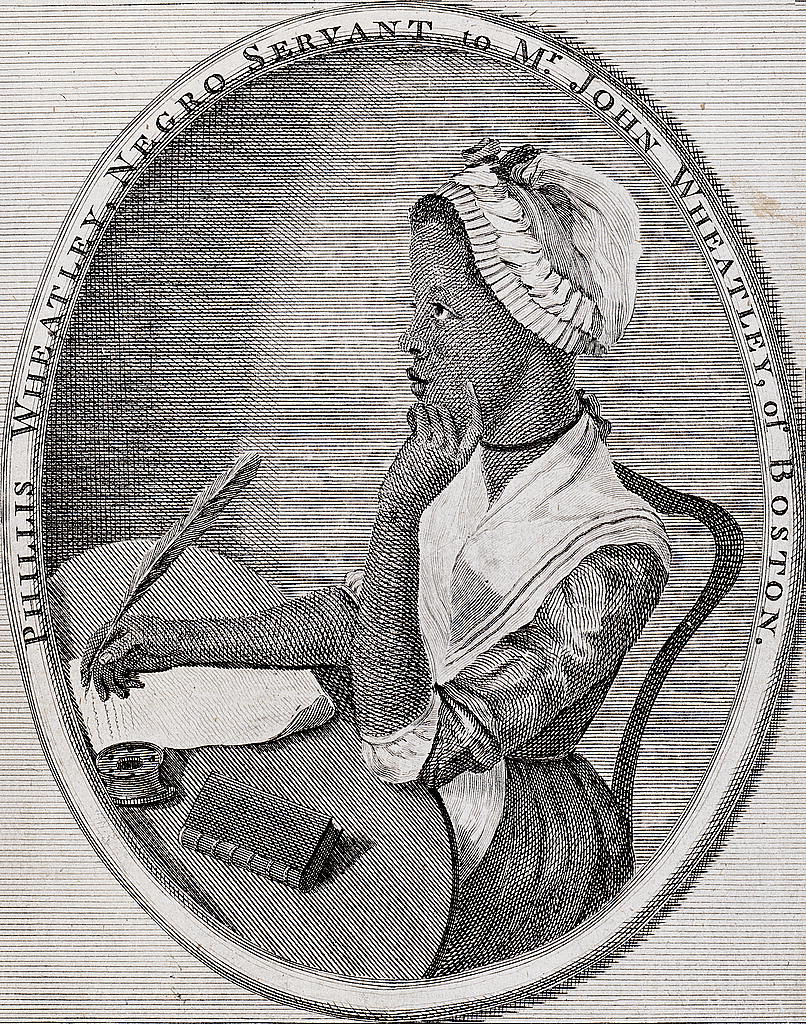
In William Cowper's "The Negro's Complaint," a free white male British citizen mimics the voice of an enslaved African. In Phillis Wheatley's "On Being Brought from Africa to America" an enslaved black woman writes of her own experience.
What differences can you identify in the way these two poems represent slavery? Are any of those differences particularly telling about the different situations of these two writers?
Deadline: Friday (4/3), 10am.
Monday, March 30, 2009
Slavery and Abolition
The British parliament passed the Slave Trade Abolition Act of 1807, making the slave trade illegal in the British Empire. At the time, Lord Mahon, a Member of Parliament, stated "this odious and execrable traffic ... has been forcibly but truly described as a traffic in human blood and tears, in misery and suffering." As you read the various texts related to this subject, try to think about who they sought to address.Look for ways text makes an appeal to that audience to enact change. If instilling such an opinion in people such as Lord Mahon was their intended ends how do these works function as a means?
Some details you may want to consider:
Equiano's slave narrative was one of the first of its genre, and was quite widely read. It provided some of the public's first views into the slave trade. What effects would the first person narration have had on readers? Do Cowper's "Negro's Complaint" or Wheatley's "On Being Brought from Africa to America" achieve a similar effect?
Religion was used by both those seeking to abolish the slave trade and those seeking to defend it. Do the religious aspects of the works you have read indicate anything about the audience the author sought?
To further complicate things for you all, consider this, too: The 1807 act merely abolished the slave trade. It would take nearly 26 years more for parliament to make slavery illegal. Does this change the way you view these texts as agents of change? Does it change the way you view slavery as a social and/or economic institution?
Some details you may want to consider:
Equiano's slave narrative was one of the first of its genre, and was quite widely read. It provided some of the public's first views into the slave trade. What effects would the first person narration have had on readers? Do Cowper's "Negro's Complaint" or Wheatley's "On Being Brought from Africa to America" achieve a similar effect?
Religion was used by both those seeking to abolish the slave trade and those seeking to defend it. Do the religious aspects of the works you have read indicate anything about the audience the author sought?
To further complicate things for you all, consider this, too: The 1807 act merely abolished the slave trade. It would take nearly 26 years more for parliament to make slavery illegal. Does this change the way you view these texts as agents of change? Does it change the way you view slavery as a social and/or economic institution?
Subscribe to:
Posts (Atom)